

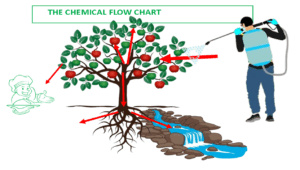
Biodiversity loss – HHPs exposure can kill beneficial insects (pollinators) such as bees, butterflies, and natural predators of pests.
Water contamination – Most chemical agents are usually eroded into rivers, lakes, and other water sources as surface run-off.
Soil contamination – HHPs can accumulate in the soil, altering microbial balance. They reduce soil fertility by killing beneficial organisms like earthworms and nitrogen-fixing bacteria.
Harm to wildlife – Birds and other animals that consume contaminated plants or prey can suffer from poisoning.
Bioaccumulation and Biomagnification – Some HHPs (like DDT and endosulfan) accumulate in animal tissues and magnify up the food chain, threatening top predators and human consumers.
Disruption of Ecosystem Services – HHPs disrupt ecological processes like pest regulation, nutrient cycling, and pollination, undermining food systems and biodiversity.
Resistance Development – Overuse of HHPs can lead to resistant pest species, requiring even more toxic chemicals and perpetuating a harmful cycle. Resistance in pests like the fall armyworm (Spodoptera frugiperda) is already compromising food security in Sub-Saharan Africa.